
Master the MD-102 Endpoint Administrator content and be ready for exam day success quickly with this Testking MD-102 testing engine. We guarantee it!We make it a reality and give you real MD-102 questions in our Microsoft MD-102 braindumps.Latest 100% VALID Microsoft MD-102 Exam Questions Dumps at below page. You can use our Microsoft MD-102 braindumps and pass your exam.
Online Microsoft MD-102 free dumps demo Below:
NEW QUESTION 1
You have an Azure AD tenant named contoso.com that contains the users shown in the following table.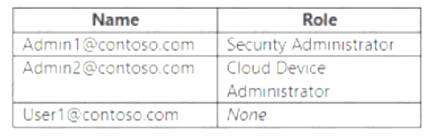
You have a computer named Computer1 that runs Windows 10. Computer1 is in a workgroup and has the local users shown in the following table.
UserA joins Computer1 to Azure AD by using user1@contoso.com.
For each of the following statements, select Yes if the statement is true. Otherwise, select No. NOTE: Each correct selection is worth one point.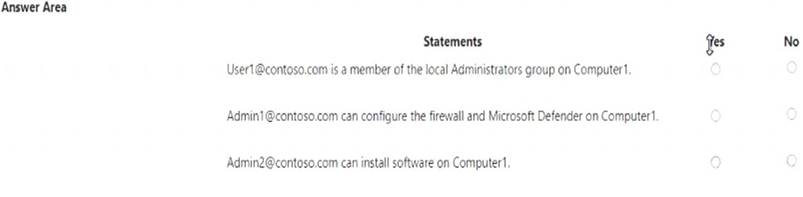
Solution:
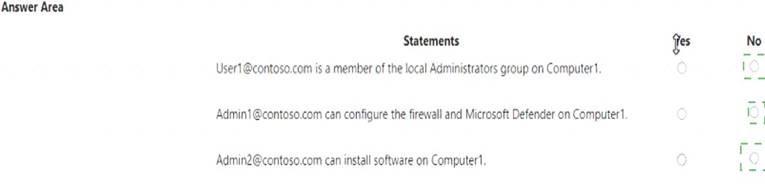
Does this meet the goal?
- A. Yes
- B. Not Mastered
Answer: A
NEW QUESTION 2
You have a Microsoft 365 ES subscription that uses Microsoft Intune. Devices are enrolled in Intune as shown in the following table.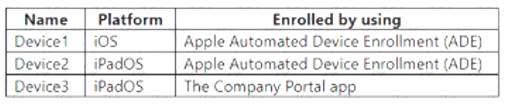
The devices are the members of groups as shown in the following table.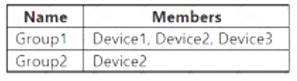
You create an JOS/iPadOS update profile as shown in the following exhibit.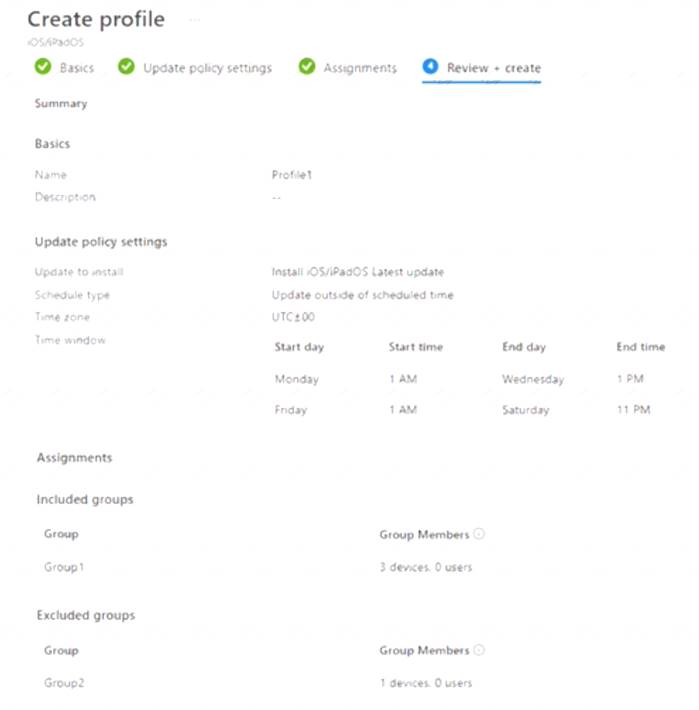
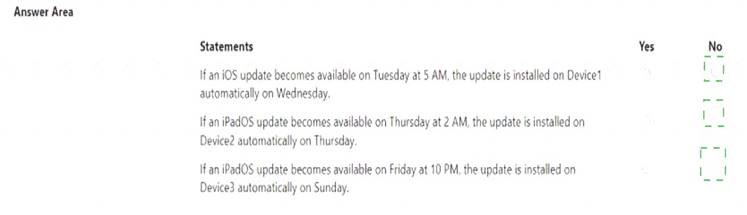
For each of the following statements, select Yes if the statement is true. Otherwise, select No. NOTE: Each correct selection is worth one point.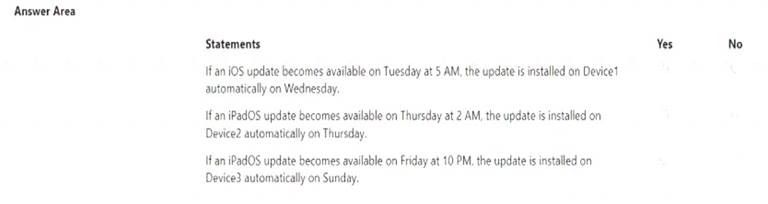
Solution:
Does this meet the goal?
- A. Yes
- B. Not Mastered
Answer: A
NEW QUESTION 3
You have a Microsoft 365 E5 subscription that contains 500 macOS devices enrolled in Microsoft Intune. You need to ensure that you can apply Microsoft Defender for Endpoint antivirus policies to the macOS
devices. The solution must minimize administrative effort.
What should you do?
- A. Onboard the macOS devices to the Microsoft Purview compliance portal.
- B. From the Microsoft Intune admin center, create a security baseline.
- C. Install Defender for Endpoint on the macOS devices.
- D. From the Microsoft Intune admin center, create a configuration profile.
Answer: C
Explanation:
To apply Microsoft Defender for Endpoint antivirus policies to the macOS devices, you need to install Defender for Endpoint on the devices. You can use Intune to deploy a script that installs Defender for Endpoint on macOS devices. After installation, you can use Intune to create and assign antivirus policies to the devices. References:
https://docs.microsoft.com/en-us/windows/security/threat-protection/microsoft-defender-atp/mac-install-with-int
NEW QUESTION 4
You are creating a device configuration profile in Microsoft Intu You need to configure specific OMA-URI settings in the profile. Which profile type template should you use?
- A. Device restrictions (Windows 10 Team)
- B. Identity protection
- C. Custom
- D. Device restrictions
Answer: C
NEW QUESTION 5
You need to resolve the performance issues in the Los Angeles office.
How should you configure the update settings? To answer, select the appropriate options in the answer area. NOTE: Each correct selection is worth one point.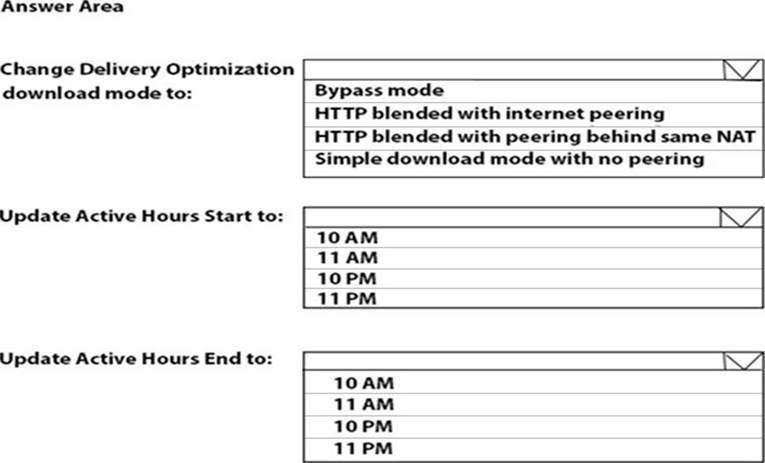
Solution:
A screenshot of a computer Description automatically generated with low confidence
Reference:
https://docs.microsoft.com/en-us/windows/deployment/update/waas-delivery-optimization https://2pintsoftware.com/delivery-optimization-dl-mode/
Does this meet the goal?
- A. Yes
- B. Not Mastered
Answer: A
NEW QUESTION 6
You have a Microsoft 365 subscription that uses Microsoft Intune Suite. You use Microsoft Intune to manage devices.
You have a Windows 11 device named Device1 that is enrolled in Intune. Device1 has been offline for 30 days.
You need to remove Device1 from Intune immediately. The solution must ensure that if the device checks in again, any apps and data provisioned by Intune are removed. User-installed apps, personal data, and
OEM-installed apps must be retained.
What should you use?
- A. a Delete action
- B. a Retire action
- C. a Fresh Start action
- D. an Autopilot Reset action
Answer: B
Explanation:
A retire action removes a device from Intune management and removes any apps and data provisioned by Intune. User-installed apps, personal data, and OEM-installed apps are retained. A retire action can be performed on devices that are offline for more than 30 days. References:
https://docs.microsoft.com/en-us/mem/intune/remote-actions/devices-wipe
NEW QUESTION 7
Which user can enroll Device6 in Intune?
- A. User4 and User2 only
- B. User4 and User 1 only
- C. User1, User2, User3, and User4
- D. User4. User Land User2 only
Answer: B
NEW QUESTION 8
You have 100 computers that run Windows 10.
You plan to deploy Windows 11 to the computers by performing a wipe and load installation. You need to recommend a method to retain the user settings and the user data.
Which three actions should you recommend be performed in sequence? To answer, move the appropriate actions from the list of actions to the answer area and arrange them in the correct order.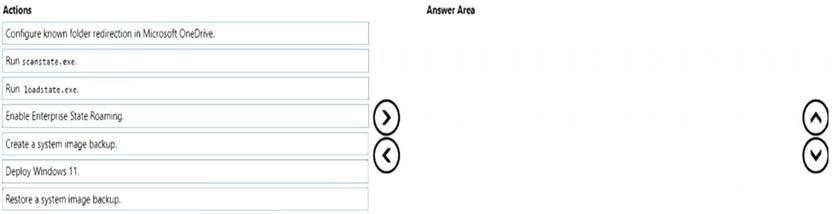
Solution:
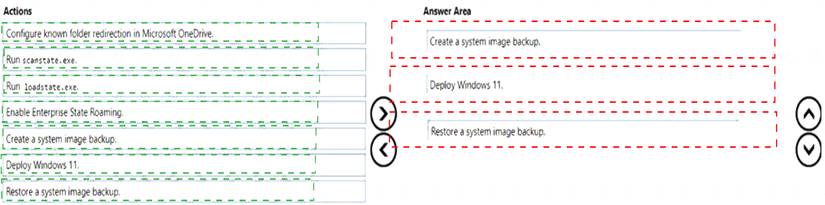
Does this meet the goal?
- A. Yes
- B. Not Mastered
Answer: A
NEW QUESTION 9
You have a Microsoft 365 subscription.
You have devices enrolled in Microsoft Intune as shown in the following table. To which devices can you deploy apps by using Intune?
- A. Device1 only
- B. Device1 and Device2 only
- C. Device1 and Device3 only
- D. Device1, Device2, and Device3 only
- E. Device1, Device2, Device3, and Device4
Answer: E
NEW QUESTION 10
You need to meet the technical requirements for the IT department. What should you do first?
- A. From the Azure Active Directory blade in the Azure portal, enable Seamless single sign-on.
- B. From the Configuration Manager console, add an Intune subscription.
- C. From the Azure Active Directory blade in the Azure portal, configure the Mobility (MDM and MAM) settings.
- D. From the Microsoft Intune blade in the Azure portal, configure the Windows enrollment settings.
Answer: C
Explanation:
Reference:
https://docs.microsoft.com/en-us/sccm/comanage/tutorial-co-manage-clients
NEW QUESTION 11
You have the Microsoft Deployment Toolkit (MDT) installed. You install and customize Windows 11 on a reference computer
You need to capture an image of the reference computer and ensure that the image can be deployed to multiple computers.
Which command should you run before you capture the image?
- A. dism
- B. wpeinit
- C. sysprep
- D. bcdedit
Answer: C
Explanation:
To capture an image of a reference computer and make it ready for deployment to multiple computers, you need to run the sysprep command with the /generalize option. This option removes all unique system information from the Windows installation, such as the computer name, security identifier (SID), and driver cache. The other commands are not used for this purpose. References: Sysprep (Generalize) a Windows installation
NEW QUESTION 12
You have 100 computers that run Windows 10. You have no servers. All the computers are joined to Microsoft Azure Active Directory (Azure AD).
The computers have different update settings, and some computers are configured for manual updates. You need to configure Windows Update. The solution must meet the following requirements: The configuration must be managed from a central location.
 Internet traffic must be minimized. Costs must be minimized.
How should you configure Windows Update? To answer, select the appropriate options in the answer area.
NOTE: Each correct selection is worth one point.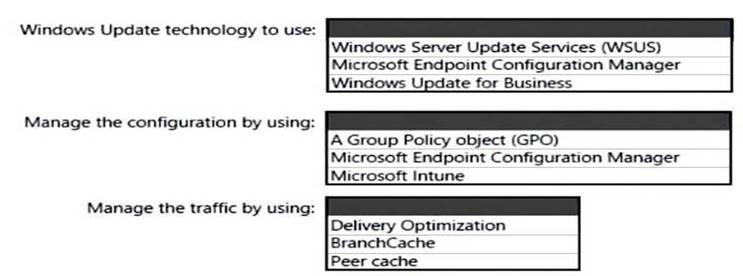
Solution:
Box 1: Windows Server Update Services (WSUS)
Windows Server Update Services (WSUS) enables information technology administrators to deploy the latest Microsoft product updates. You can use WSUS to fully manage the distribution of updates that are released through Microsoft Update to computers on your network.
Windows Server Update Services is a built-in server role that includes the following enhancements: Can be added and removed by using the Server Manager
Includes Windows PowerShell cmdlets to manage the most important administrative tasks in WSUS Etc.
Box 2: A Group Policy object
In an Active Directory environment, you can use Group Policy to define how computers and users can interact with Windows Update to obtain automatic updates from Windows Server Update Services (WSUS).
Box 3: BranchCache
BranchCache is a bandwidth-optimization feature that has been available since the Windows Server 2008 R2 and Windows 7 operating systems. Each client has a cache and acts as an alternate source for content that devices on its own network request. Windows Server Update Services (WSUS) and Microsoft Endpoint Manager can use BranchCache to optimize network bandwidth during update deployment, and it's easy to configure for either of them. BranchCache has two operating modes: Distributed Cache mode and Hosted Cache mode.
Reference: https://docs.microsoft.com/en-us/windows/deployment/update/waas-branchcache https://docs.microsoft.com/en-us/windows-server/administration/windows-server-update-services/deploy/4-conf
Does this meet the goal?
- A. Yes
- B. Not Mastered
Answer: A
NEW QUESTION 13
You have a Microsoft 365 subscription that uses Microsoft Intune Suite. You use Microsoft Intune to manage devices.
You have the devices shown in the following table.
Which devices can be changed to Windows 11 Enterprise by using subscription activation?
- A. Device3 only
- B. Device2 and Device3 only
- C. Device 1 and Device2 only
- D. Device1, Device2, and Device3
Answer: A
NEW QUESTION 14
You need to recommend a solution to meet the device management requirements.
What should you include in the recommendation? To answer, select the appropriate options in the answer area. NOTE: Each correct selection is worth one point.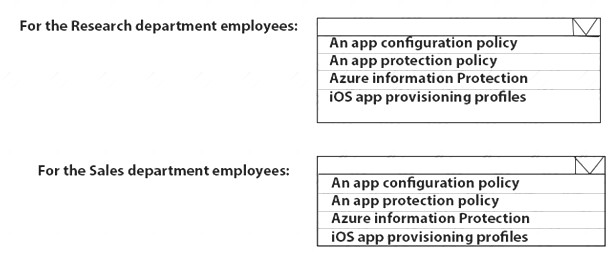
Solution:
Reference:
https://github.com/MicrosoftDocs/IntuneDocs/blob/master/intune/app-protection-policy.md
https://docs.microsoft.com/en-us/azure/information-protection/configure-usage-rights#do-not-forward-option-fo
Does this meet the goal?
- A. Yes
- B. Not Mastered
Answer: A
NEW QUESTION 15
You have the devices shown in the following table.
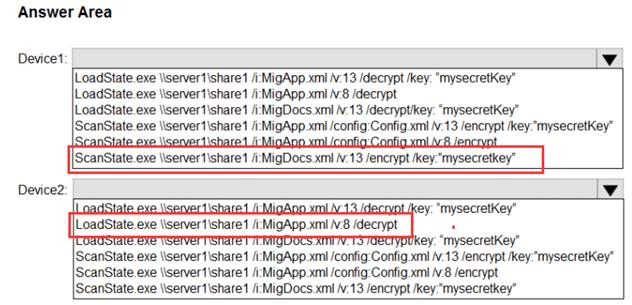
You need to migrate app data from Device1 to Device2. The data must be encrypted and stored on Seryer1 during the migration.
Which command should you run on each device? To answer, select the appropriate options in the answer area. NOTE: Each correct selection is worth one point.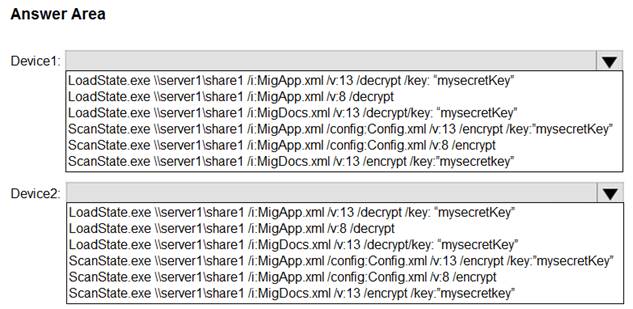
Solution:
Does this meet the goal?
- A. Yes
- B. Not Mastered
Answer: A
NEW QUESTION 16
What should you configure to meet the technical requirements for the Azure AD-joined computers?
- A. Windows Hello for Business from the Microsoft Intune blade in the Azure portal.
- B. The Accounts options in an endpoint protection profile.
- C. The Password Policy settings in a Group Policy object (GPO).
- D. A password policy from the Microsoft Office 365 portal.
Answer: A
Explanation:
References:
https://docs.microsoft.com/en-us/windows/security/identity-protection/hello-for-business/hello-manage-inorgani
NEW QUESTION 17
......
100% Valid and Newest Version MD-102 Questions & Answers shared by DumpSolutions.com, Get Full Dumps HERE: https://www.dumpsolutions.com/MD-102-dumps/ (New 98 Q&As)
