
we provide Realistic ISC2 SSCP exam guide which are the best for clearing SSCP test, and to get certified by ISC2 System Security Certified Practitioner (SSCP). The SSCP Questions & Answers covers all the knowledge points of the real SSCP exam. Crack your ISC2 SSCP Exam with latest dumps, guaranteed!
Check SSCP free dumps before getting the full version:
NEW QUESTION 1
Which of the following is an IP address that is private (i.e. reserved for internal networks, and not a valid address to use on the Internet)?
- A. 172.12.42.5
- B. 172.140.42.5
- C. 172.31.42.5
- D. 172.15.42.5
Answer: C
Explanation:
This is a valid Class B reserved address. For Class B networks, the reserved addresses are 172.16.0.0 - 172.31.255.255.
The private IP address ranges are defined within RFC 1918: RFC 1918 private ip address range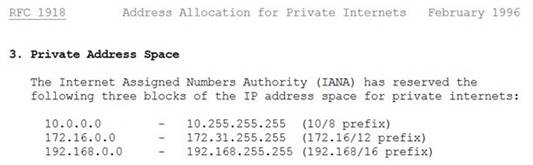
C:\Users\MCS\Desktop\1.jpg
The following answers are incorrect:
172.12.42.5 Is incorrect because it is not a Class B reserved address. 172.140.42.5 Is incorrect because it is not a Class B reserved address. 172.15.42.5 Is incorrect because it is not a Class B reserved address.
NEW QUESTION 2
Which of the following remote access authentication systems is the most robust?
- A. TACACS+
- B. RADIUS
- C. PAP
- D. TACACS
Answer: A
Explanation:
TACACS+ is a proprietary Cisco enhancement to TACACS and is more robust than RADIUS. PAP is not a remote access authentication system but a remote node security protocol.
Source: KRUTZ, Ronald L. & VINES, Russel D., The CISSP Prep Guide: Mastering the Ten Domains of Computer Security, John Wiley & Sons, 2001, Chapter 3: Telecommunications and Network Security (page 122).
NEW QUESTION 3
Which of the following is the LEAST user accepted biometric device?
- A. Fingerprint
- B. Iris scan
- C. Retina scan
- D. Voice verification
Answer: C
Explanation:
The biometric device that is least user accepted is the retina scan, where a system scans the blood-vessel pattern on the backside of the eyeball. When using this device, an individual has to place their eye up to a device, and may require a puff of air to be blown into the eye. The iris scan only needs for an individual to glance at a camera that could be placed above a door.
Source: HARRIS, Shon, All-In-One CISSP Certification Exam Guide, McGraw- Hill/Osborne, 2002, Chapter 4: Access Control (page 131).
NEW QUESTION 4
What level of assurance for a digital certificate verifies a user's name, address, social security number, and other information against a credit bureau database?
- A. Level 1/Class 1
- B. Level 2/Class 2
- C. Level 3/Class 3
- D. Level 4/Class 4
Answer: B
Explanation:
Users can obtain certificates with various levels of assurance. Here is a list that describe each of them:
- Class 1/Level 1 for individuals, intended for email, no proof of identity
For example, level 1 certificates verify electronic mail addresses. This is done through the use of a personal information number that a user would supply when asked to register. This level of certificate may also provide a name as well as an electronic mail address; however, it may or may not be a genuine name (i.e., it could be an alias). This proves that a human being will reply back if you send an email to that name or email address.
- Class 2/Level 2 is for organizations and companies for which proof of identity is required Level 2 certificates verify a user's name, address, social security number, and other information against a credit bureau database.
- Class 3/Level 3 is for servers and software signing, for which independent verification and checking of identity and authority is done by the issuing certificate authority
Level 3 certificates are available to companies. This level of certificate provides photo identification to accompany the other items of information provided by a level 2 certificate.
- Class 4 for online business transactions between companies
- Class 5 for private organizations or governmental security
References:
http://en.wikipedia.org/wiki/Digital_certificate veriSign introduced the concept of classes of digital certificates:
Also see:
Source: TIPTON, Harold F. & KRAUSE, Micki, Information Security Management Handbook, 4th edition (volume 1), 2000, CRC Press, Chapter 3, Secured Connections to External Networks (page 54).
NEW QUESTION 5
When attempting to establish Liability, which of the following would be describe as performing the ongoing maintenance necessary to keep something in proper working order, updated, effective, or to abide by what is commonly expected in a situation?
- A. Due care
- B. Due concern
- C. Due diligence
- D. Due practice
Answer: A
Explanation:
My friend JD Murray at Techexams.net has a nice definition of both, see his explanation below:
Oh, I hate these two. It's like describing the difference between "jealously" and "envy." Kinda the same thing but not exactly. Here it goes:
Due diligence is performing reasonable examination and research before committing to a course of action. Basically, "look before you leap." In law, you would perform due diligence by researching the terms of a contract before signing it. The opposite of due diligence might be "haphazard" or "not doing your homework."
Due care is performing the ongoing maintenance necessary to keep something in proper working order, or to abide by what is commonly expected in a situation. This is especially important if the due care situation exists because of a contract, regulation, or law. The opposite of due care is "negligence."
In summary, Due Diligence is Identifying threats and risks while Due Care is Acting upon findings to mitigate risks
EXAM TIP:
The Due Diligence refers to the steps taken to identify risks that exists within the environment. This is base on best practices, standards such as ISO 27001, ISO 17799, and other consensus. The first letter of the word Due and the word Diligence should remind you of this. The two letters are DD = Do Detect.
In the case of due care, it is the actions that you have taken (implementing, designing, enforcing, updating) to reduce the risks identified and keep them at an acceptable level. The same apply here, the first letters of the work Due and the work Care are DC. Which should remind you that DC = Do correct.
The other answers are only detractors and not valid. Reference(s) used for this question:
CISSP Study Guide, Syngress, By Eric Conrad, Page 419
HARRIS, Shon, All-In-One CISSP Certification Exam Guide Fifth Edition, McGraw-Hill, Page 49 and 110.
and
Corporate; (Isc)² (2010-04-20). Official (ISC)2 Guide to the CISSP CBK, Second Edition ((ISC)2 Press) (Kindle Locations 11494-11504). Taylor & Francis. Kindle Edition.
and
My friend JD Murray at Techexams.net
NEW QUESTION 6
Which of the following categories of hackers poses the greatest threat?
- A. Disgruntled employees
- B. Student hackers
- C. Criminal hackers
- D. Corporate spies
Answer: A
Explanation:
According to the authors, hackers fall in these categories, in increasing threat order: security experts, students, underemployed adults, criminal hackers, corporate spies
and disgruntled employees.
Disgruntled employees are the most dangerous security problem of all because they are most likely to have a good knowledge of the organization's IT systems and security measures.
Source: STREBE, Matthew and PERKINS, Charles, Firewalls 24seven, Sybex 2000, Chapter 2: Hackers.
NEW QUESTION 7
Why should batch files and scripts be stored in a protected area?
- A. Because of the least privilege concept.
- B. Because they cannot be accessed by operators.
- C. Because they may contain credentials.
- D. Because of the need-to-know concept.
Answer: C
Explanation:
Because scripts contain credentials, they must be stored in a protected area and the transmission of the scripts must be dealt with carefully. Operators might need access to batch files and scripts. The least privilege concept requires that each subject in a system be granted the most restrictive set of privileges needed for the performance of authorized tasks. The need-to-know principle requires a user having necessity for access to, knowledge of, or possession of specific information required to perform official tasks or services.
Source: WALLHOFF, John, CISSP Summary 2002, April 2002, CBK#1 Access Control System & Methodology (page 3)
NEW QUESTION 8
What can be defined as: It confirms that users?? needs have been met by the supplied solution ?
- A. Accreditation
- B. Certification
- C. Assurance
- D. Acceptance
Answer: D
Explanation:
Acceptance confirms that users?? needs have been met by the supplied solution. Verification and Validation informs Acceptance by establishing the evidence ?C set against acceptance criteria - to determine if the solution meets the users?? needs. Acceptance should also explicitly address any integration or interoperability requirements involving other equipment or systems. To enable acceptance every user and system requirement must have a 'testable' characteristic.
Accreditation is the formal acceptance of security, adequacy, authorization for operation and acceptance of existing risk. Accreditation is the formal declaration by a Designated Approving Authority (DAA) that an IS is approved to operate in a particular security mode using a prescribed set of safeguards to an acceptable level of risk.
Certification is the formal testing of security safeguards and assurance is the degree of confidence that the implemented security measures work as intended. The certification is a Comprehensive evaluation of the technical and nontechnical security features of an IS and other safeguards, made in support of the accreditation process, to establish the extent to which a particular design and implementation meets a set of specified ecurity requirements.
Assurance is the descriptions of the measures taken during development and evaluation of the product to assure compliance with the claimed security functionality. For example, an evaluation may require that all source code is kept in a change management system, or that full functional testing is performed. The Common Criteria provides a catalogue of these, and the requirements may vary from one evaluation to the next. The requirements for particular targets or types of products are documented in the Security Targets (ST) and Protection Profiles (PP), respectively.
Source: ROTHKE, Ben, CISSP CBK Review presentation on domain 4, August 1999.
and
Official ISC2 Guide to the CISSP CBK, Second Edition, on page 211. and
http://www.aof.mod.uk/aofcontent/tactical/randa/content/randaintroduction.htm
NEW QUESTION 9
What is defined as the hardware, firmware and software elements of a trusted computing base that implement the reference monitor concept?
- A. The reference monitor
- B. Protection rings
- C. A security kernel
- D. A protection domain
Answer: C
Explanation:
A security kernel is defined as the hardware, firmware and software elements of a trusted computing base that implement the reference monitor concept. A reference monitor is a system component that enforces access controls on an object. A protection domain consists of the execution and memory space assigned to each process. The use of protection rings is a scheme that supports multiple protection domains.
Source: KRUTZ, Ronald L. & VINES, Russel D., The CISSP Prep Guide: Mastering the Ten Domains of Computer Security, John Wiley & Sons, 2001, Chapter 5: Security Architecture and Models (page 194).
NEW QUESTION 10
Which of the following would best describe a Concealment cipher?
- A. Permutation is used, meaning that letters are scrambled.
- B. Every X number of words within a text, is a part of the real message.
- C. Replaces bits, characters, or blocks of characters with different bits, characters or blocks.
- D. Hiding data in another message so that the very existence of the data is concealed.
Answer: B
Explanation:
When a concealment cipher is used, every X number of words within a text, is a part of the real message. The message is within another message.
A concealment cipher is a message within a message. If my other super-secret spy buddy and I decide our key value is every third word, then when I get a message from him, I will pick out every third word and write it down. Suppose he sends me a message that reads, ??The saying, ??The time is right?? is not cow language, so is now a dead subject.?? Because my key is every third word, I come up with ??The right cow is dead.?? This again means nothing to me, and I am now turning in my decoder ring.
Concealment ciphers include the plaintext within the ciphertext. It is up to the recipient to know which letters or symbols to exclude from the ciphertext in order to yield the plaintext. Here is an example of a concealment cipher:
i2l32i5321k34e1245ch456oc12ol234at567e
Remove all the numbers, and you'll have i like chocolate. How about this one? Larry even appears very excited. No one worries.
The first letter from each word reveals the message leave now. Both are easy, indeed, but many people have crafted more ingenious ways of concealing the messages. By the way, this type of cipher doesn't even need ciphertext, such as that in the above examples.
Consider the invisible drying ink that kids use to send secret messages. In a more extreme example, a man named Histiaeus, during 5th century B.C., shaved the head of a trusted slave, then tattooed the message onto his bald head. When the slave's hair grew back, Histiaeus sent the slave to the message's intended recipient, Aristagoros, who shaved the slave's head and read the message instructing him to revolt.
The following answers are incorrect:
A transposition cipher uses permutations.
A substitution cipher replaces bits, characters, or blocks of characters with different bits, characters or blocks.
Steganography refers to hiding the very existence of the message.
Source: WALLHOFF, John, CBK#5 Cryptography (CISSP Study Guide), April 2002 (page 1).
and also see: http://www.go4expert.com/forums/showthread.php?t=415
NEW QUESTION 11
Which of the following are the steps usually followed in the development of documents such as security policy, standards and procedures?
- A. design, development, publication, coding, and testing.
- B. design, evaluation, approval, publication, and implementation.
- C. initiation, evaluation, development, approval, publication, implementation, and maintenance.
- D. feasibility, development, approval, implementation, and integration.
Answer: C
Explanation:
The common steps used the the development of security policy are initiation of the project, evaluation, development, approval, publication, implementation, and maintenance. The other choices listed are the phases of the software development life cycle and not the step used to develop ducuments such as Policies, Standards, etc...
Reference: TIPTON, Harold F. & KRAUSE, MICKI, Information Security Management Handbook, 4th Edition, Volume 3, 2002, Auerbach Publications.
NEW QUESTION 12
Which Network Address Translation (NAT) is the most convenient and secure solution?
- A. Hiding Network Address Translation
- B. Port Address Translation
- C. Dedicated Address Translation
- D. Static Address Translation
Answer: B
Explanation:
Static network address translation offers the most flexibility, but it is not normally practical given the shortage of IP version 4 addresses. Hiding network address translation is was an interim step in the development of network address translation technology, and is seldom used because port address translation offers additional features above and beyond those present in hiding network address translation while maintaining the same basic design and engineering considerations. PAT is often the most convenient and secure solution.
Source: WACK, John et al., NIST Special publication 800-41, Guidelines on Firewalls and Firewall Policy, January 2002 (page 18).
NEW QUESTION 13
What is the RESULT of a hash algorithm being applied to a message ?
- A. A digital signature
- B. A ciphertext
- C. A message digest
- D. A plaintext
Answer: C
Explanation:
As when a hash algorithm is applied on a message , it produces a message digest.
The other answers are incorrect because :
A digital signature is a hash value that has been encrypted with a sender's private key. A ciphertext is a message that appears to be unreadable.
A plaintext is a readable data.
Reference : Shon Harris , AIO v3 , Chapter-8 : Cryptography , Page : 593-594 , 640 , 648
NEW QUESTION 14
Which of the following transmission media would NOT be affected by cross talk or interference?
- A. Copper cable
- B. Radio System
- C. Satellite radiolink
- D. Fiber optic cables
Answer: D
Explanation:
Only fiber optic cables are not affected by crosstalk or interference. For your exam you should know the information about transmission media:
Copper Cable
Copper cable is very simple to install and easy to tap. It is used mostly for short distance and supports voice and data.
Copper has been used in electric wiring since the invention of the electromagnet and the telegraph in the 1820s.The invention of the telephone in 1876 created further demand for copper wire as an electrical conductor.
Copper is the electrical conductor in many categories of electrical wiring. Copper wire is used in power generation, power transmission, power distribution, telecommunications, electronics circuitry, and countless types of electrical equipment. Copper and its alloys are also used to make electrical contacts. Electrical wiring in buildings is the most important market for the copper industry. Roughly half of all copper mined is used to manufacture electrical wire and cable conductors.
Copper Cable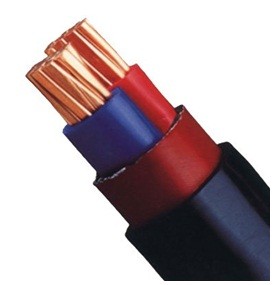
C:\Users\MCS\Desktop\1.jpg Image Source -
http://i00.i.aliimg.com/photo/v0/570456138/FRLS_HR_PVC_Copper_Cable.jpg
Coaxial cable
Coaxial cable, or coax (pronounced 'ko.aks), is a type of cable that has an inner conductor surrounded by a tubular insulating layer, surrounded by a tubular conducting shield. Many coaxial cables also have an insulating outer sheath or jacket. The term coaxial comes from the inner conductor and the outer shield sharing a geometric axis. Coaxial cable was invented by English engineer and mathematician Oliver Heaviside, who patented the design in 1880.Coaxial cable differs from other shielded cable used for carrying lower- frequency signals, such as audio signals, in that the dimensions of the cable are controlled to give a precise, constant conductor spacing, which is needed for it to function efficiently as a radio frequency transmission line.
Coaxial cable are expensive and does not support many LAN's. It supports data and video Coaxial Cable
C:\Users\MCS\Desktop\1.jpg
Image Source - http://www.tlc-direct.co.uk/Images/Products/size_3/CARG59.JPG Fiber optics
An optical fiber cable is a cable containing one or more optical fibers that are used to carry light. The optical fiber elements are typically individually coated with plastic layers and contained in a protective tube suitable for the environment where the cable will be deployed. Different types of cable are used for different applications, for example long distance telecommunication, or providing a high-speed data connection between different parts of a building.
Fiber optics used for long distance, hard to splice, not vulnerable to cross talk and difficult to tap. It supports voice data, image and video.
Radio System
Radio systems are used for short distance,cheap and easy to tap.
Radio is the radiation (wireless transmission) of electromagnetic signals through the atmosphere or free space.
Information, such as sound, is carried by systematically changing (modulating) some property of the radiated waves, such as their amplitude, frequency, phase, or pulse width. When radio waves strike an electrical conductor, the oscillating fields induce an alternating current in the conductor. The information in the waves can be extracted and transformed back into its original form.
Fiber Optics
C:\Users\MCS\Desktop\1.jpg
Image Source - http://aboveinfranet.com/wp-content/uploads/2014/04/fiber-optic-cables- above-infranet-solutions.jpg
Microwave radio system
Microwave transmission refers to the technology of transmitting information or energy by the use of radio waves whose wavelengths are conveniently measured in small numbers of centimetre; these are called microwaves.
Microwaves are widely used for point-to-point communications because their small wavelength allows conveniently-sized antennas to direct them in narrow beams, which can be pointed directly at the receiving antenna. This allows nearby microwave equipment to
use the same frequencies without interfering with each other, as lower frequency radio waves do. Another advantage is that the high frequency of microwaves gives the microwave band a very large information-carrying capacity; the microwave band has a bandwidth 30 times that of all the rest of the radio spectrum below it. A disadvantage is that microwaves are limited to line of sight propagation; they cannot pass around hills or mountains as lower frequency radio waves can.
Microwave radio transmission is commonly used in point-to-point communication systems on the surface of the Earth, in satellite communications, and in deep space radio communications. Other parts of the microwave radio band are used for radars, radio navigation systems, sensor systems, and radio astronomy.
Microwave radio systems are carriers for voice data signal, cheap and easy to tap. Microwave Radio System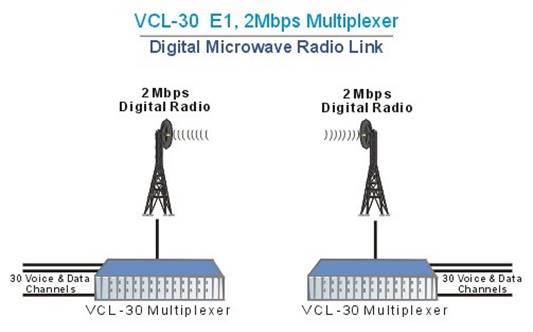
C:\Users\MCS\Desktop\1.jpg Image Source -
http://www.valiantcom.com/images/applications/e1_digital_microwave_radio.gif
Satellite Radio Link
Satellite radio is a radio service broadcast from satellites primarily to cars, with the signal broadcast nationwide, across a much wider geographical area than terrestrial radio stations. It is available by subscription, mostly commercial free, and offers subscribers more stations and a wider variety of programming options than terrestrial radio.
Satellite radio link uses transponder to send information and easy to tap. The following answers are incorrect:
Copper Cable - Copper cable is very simple to install and easy to tap. It is used mostly for short distance and supports voice and data.
Radio System - Radio systems are used for short distance,cheap and easy to tap. Satellite Radio Link - Satellite radio link uses transponder to send information and easy to
tap.
The following reference(s) were/was used to create this question: CISA review manual 2014 page number 265 &
Official ISC2 guide to CISSP CBK 3rd Edition Page number 233
NEW QUESTION 15
The MOST common threat that impacts a business's ability to function normally is:
- A. Power Outage
- B. Water Damage
- C. Severe Weather
- D. Labor Strike
Answer: A
Explanation:
The MOST common threat that impacts a business's ability to function normally is power. Power interruption cause more business interruption than any other type of event.
The second most common threat is Water such as flood, water damage from broken pipe, leaky roof, etc...
Threats will be discovered while doing your Threats and Risk Assessments (TRA).
There are three elements of risks: threats, assets, and mitigating factors (countermeasures, safeguards, controls).
A threat is an event or situation that if it occured would affect your business and may even prevent it from functioning normally or in some case functioning at all. Evaluation of threats is done by looking at Likelihood and Impact of possible threat. Safeguards, countermeasures, and controls would be used to bring the threat level down to an acceptable level.
Other common events that can impact a company are:
Weather, cable cuts, fires, labor disputes, transportation mishaps, hardware failure, chemical spills, sabotage.
References:
The Official ISC2 Guide to the CISSP CBK, Second Edition, Page 275-276
NEW QUESTION 16
Which of the following statements pertaining to software testing is incorrect?
- A. Unit testing should be addressed and considered when the modules are being designed.
- B. Test data should be part of the specifications.
- C. Testing should be performed with live data to cover all possible situations.
- D. Test data generators can be used to systematically generate random test data that can be used to test programs.
Answer: C
Explanation:
Live or actual field data is not recommended for use in the testing procedures because both data types may not cover out of range situations and the correct outputs of the test are unknown. Live data would not be the best data to use because of the lack of anomalies and also because of the risk of exposure to your live data.
Source: KRUTZ, Ronald L. & VINES, Russel D., The CISSP Prep Guide: Mastering the Ten Domains of Computer Security, John Wiley & Sons, 2001, Chapter 7: Applications and Systems Development (page 251).
NEW QUESTION 17
A common way to create fault tolerance with leased lines is to group several T1s together with an inverse multiplexer placed:
- A. at one end of the connection.
- B. at both ends of the connection.
- C. somewhere between both end points.
- D. in the middle of the connection.
Answer: B
Explanation:
A common way to create fault tolerance with leased lines is to group several T1s together with an inverse multiplexer placed at both ends of the connection.
In fact it would be a Multiplexer at one end and DeMultiplexer at other end or vice versa. Inverse Multiplexer at both end.
In electronics, a multiplexer (or mux) is a device that selects one of several analog or digital
input signals and forwards the selected input into a single line. A multiplexer of 2n inputs has n select lines, which are used to select which input line to send to the output. Multiplexers are mainly used to increase the amount of data that can be sent over the network within a certain amount of time and bandwidth. A multiplexer is also called a data selector.
An electronic multiplexer makes it possible for several signals to share one device or resource, for example one A/D converter or one communication line, instead of having one device per input signal.
On the other hand, a demultiplexer (or demux) is a device taking a single input signal and selecting one of many data-output-lines, which is connected to the single input. A multiplexer is often used with a complementary demultiplexer on the receiving end.
An electronic multiplexer can be considered as a multiple-input, single-output switch, and a demultiplexer as a single-input, multiple-output switch
References:
KRUTZ, Ronald L. & VINES, Russel D., The CISSP Prep Guide: Mastering the Ten Domains of Computer Security, 2001, John Wiley & Sons, Page 72.
and https://secure.wikimedia.org/wikipedia/en/wiki/Multiplexer
NEW QUESTION 18
What size is an MD5 message digest (hash)?
- A. 128 bits
- B. 160 bits
- C. 256 bits
- D. 128 bytes
Answer: A
Explanation:
MD5 is a one-way hash function producing a 128-bit message digest from the input message, through 4 rounds of transformation. MD5 is specified as an Internet Standard (RFC1312).
Reference(s) used for this question:
TIPTON, Hal, (ISC)2, Introduction to the CISSP Exam presentation.
NEW QUESTION 19
Which of the following is less likely to accompany a contingency plan, either within the plan itself or in the form of an appendix?
- A. Contact information for all personnel.
- B. Vendor contact information, including offsite storage and alternate site.
- C. Equipment and system requirements lists of the hardware, software, firmware and other resources required to support system operations.
- D. The Business Impact Analysis.
Answer: A
Explanation:
Why is this the correct answer? Simply because it is WRONG, you would have contact information for your emergency personnel within the plan but NOT for ALL of your personnel. Be careful of words such as ALL.
According to NIST's Special publication 800-34, contingency plan appendices provide key details not contained in the main body of the plan. The appendices should reflect the specific technical, operational, and management contingency requirements of the given system. Contact information for recovery team personnel (not all personnel) and for vendor should be included, as well as detailed system requirements to allow for supporting of system operations. The Business Impact Analysis (BIA) should also be included as an appendix for reference should the plan be activated.
Reference(s) used for this question:
SWANSON, Marianne, & al., National Institute of Standards and Technology (NIST), NIST Special Publication 800-34, Contingency Planning Guide for Information Technology Systems
NEW QUESTION 20
Which layer of the OSI/ISO model handles physical addressing, network topology, line discipline, error notification, orderly delivery of frames, and optional flow control?
- A. Physical
- B. Data link
- C. Network
- D. Session
Answer: B
Explanation:
The Data Link layer provides data transport across a physical link. It handles physical addressing, network topology, line discipline, error notification, orderly delivery of frames, and optional flow control.
Source: ROTHKE, Ben, CISSP CBK Review presentation on domain 2, August 1999.
NEW QUESTION 21
Attributable data should be:
- A. always traced to individuals responsible for observing and recording the data
- B. sometimes traced to individuals responsible for observing and recording the data
- C. never traced to individuals responsible for observing and recording the data
- D. often traced to individuals responsible for observing and recording the data
Answer: A
Explanation:
As per FDA data should be attributable, original, accurate, contemporaneous
and legible. In an automated system attributability could be achieved by a computer system designed to identify individuals responsible for any input.
Source: U.S. Department of Health and Human Services, Food and Drug Administration, Guidance for Industry - Computerized Systems Used in Clinical Trials, April 1999, page 1.
NEW QUESTION 22
Which of the following is true about link encryption?
- A. Each entity has a common key with the destination node.
- B. Encrypted messages are only decrypted by the final node.
- C. This mode does not provide protection if anyone of the nodes along the transmission path is compromised.
- D. Only secure nodes are used in this type of transmission.
Answer: C
Explanation:
In link encryption, each entity has keys in common with its two neighboring nodes in the transmission chain.
Thus, a node receives the encrypted message from its predecessor, decrypts it, and then re-encrypts it with a new key, common to the successor node. Obviously, this mode does not provide protection if anyone of the nodes along the transmission path is compromised.
Encryption can be performed at different communication levels, each with different types of protection and implications. Two general modes of encryption implementation are link encryption and end-to-end encryption.
Link encryption encrypts all the data along a specific communication path, as in a satellite link, T3 line, or telephone circuit. Not only is the user information encrypted, but the header, trailers, addresses, and routing data that are part of the packets are also encrypted. The only traffic not encrypted in this technology is the data link control messaging information, which includes instructions and parameters that the different link devices use to synchronize communication methods. Link encryption provides protection against packet sniffers and eavesdroppers.
In end-to-end encryption, the headers, addresses, routing, and trailer information are not encrypted, enabling attackers to learn more about a captured packet and where it is headed.
Reference(s) used for this question:
Harris, Shon (2012-10-25). CISSP All-in-One Exam Guide, 6th Edition (pp. 845-846). McGraw-Hill.
And:
KRUTZ, Ronald L. & VINES, Russel D., The CISSP Prep Guide: Mastering the Ten Domains of Computer Security, John Wiley & Sons, 2001, Chapter 4: Cryptography (page 132).
NEW QUESTION 23
Which of the following best defines a Computer Security Incident Response Team (CSIRT)?
- A. An organization that provides a secure channel for receiving reports about suspected security incidents.
- B. An organization that ensures that security incidents are reported to the authorities.
- C. An organization that coordinates and supports the response to security incidents.
- D. An organization that disseminates incident-related information to its constituency and other involved parties.
Answer: C
Explanation:
RFC 2828 (Internet Security Glossary) defines a Computer Security Incident Response Team (CSIRT) as an organization that coordinates and supports the response to security incidents that involves sites within a defined constituency. This is the proper definition for the CSIRT. To be considered a CSIRT, an organization must provide a secure channel for receiving reports about suspected security incidents, provide assistance to members of its constituency in handling the incidents and disseminate incident-related information to its constituency and other involved parties. Security-related incidents do not necessarily have to be reported to the authorities.
Source: SHIREY, Robert W., RFC2828: Internet Security Glossary, may 2000.
NEW QUESTION 24
......
100% Valid and Newest Version SSCP Questions & Answers shared by DumpSolutions.com, Get Full Dumps HERE: https://www.dumpsolutions.com/SSCP-dumps/ (New 1074 Q&As)
