
Want to know Exambible 312-50v12 Exam practice test features? Want to lear more about EC-Council Certified Ethical Hacker Exam (CEHv12) certification experience? Study Validated EC-Council 312-50v12 answers to Latest 312-50v12 questions at Exambible. Gat a success with an absolute guarantee to pass EC-Council 312-50v12 (Certified Ethical Hacker Exam (CEHv12)) test on your first attempt.
Free 312-50v12 Demo Online For EC-Council Certifitcation:
NEW QUESTION 1
Attacker Rony installed a rogue access point within an organization's perimeter and attempted to intrude into its internal network. Johnson, a security auditor, identified some unusual traffic in the internal network that is aimed at cracking the authentication mechanism. He immediately turned off the targeted network and tested for any weak and outdated security mechanisms that are open to attack. What is the type of vulnerability assessment performed by johnson in the above scenario?
- A. Host-based assessment
- B. Wireless network assessment
- C. Application assessment
- D. Distributed assessment
Answer: B
Explanation:
Wireless network assessment determines the vulnerabilities in an organization’s wireless networks. In the past, wireless networks used weak and defective data encryption mechanisms. Now, wireless network standards have evolved, but many networks still use weak and outdated security mechanisms and are open to attack. Wireless network assessments try to attack wireless authentication mechanisms and gain unauthorized access. This type of assessment tests wireless networks and identifies rogue networks that may exist within an organization’s perimeter. These assessments audit client-specified sites with a wireless network. They sniff wireless network traffic and try to crack encryption keys. Auditors test other network access if they gain access to the wireless network.
NEW QUESTION 2
DHCP snooping is a great solution to prevent rogue DHCP servers on your network. Which security feature on switchers leverages the DHCP snooping database to help prevent man-in-the-middle attacks?
- A. Spanning tree
- B. Dynamic ARP Inspection (DAI)
- C. Port security
- D. Layer 2 Attack Prevention Protocol (LAPP)
Answer: B
Explanation:
Dynamic ARP inspection (DAI) protects switching devices against Address Resolution Protocol (ARP) packet spoofing (also known as ARP poisoning or ARP cache poisoning).
DAI inspects ARPs on the LAN and uses the information in the DHCP snooping database on the switch to validate ARP packets and to protect against ARP spoofing. ARP requests and replies are compared against entries in the DHCP snooping database, and filtering decisions are made based on the results of those comparisons. When an attacker tries to use a forged ARP packet to spoof an address, the switch compares the address with entries in the database. If the media access control (MAC) address or IP address in the ARP packet does not match a valid entry in the DHCP snooping database, the packet is dropped.
NEW QUESTION 3
Steven connected his iPhone to a public computer that had been infected by Clark, an attacker. After establishing the connection with the public computer, Steven enabled iTunes WI-FI sync on the computer so that the device could continue communication with that computer even after being physically disconnected. Now, Clark gains access to Steven’s iPhone through the infected computer and is able to monitor and read all of Steven’s activity on the iPhone, even after the device is out of the communication zone.
Which of the following attacks is performed by Clark in above scenario?
- A. IOS trustjacking
- B. lOS Jailbreaking
- C. Exploiting SS7 vulnerability
- D. Man-in-the-disk attack
Answer: A
Explanation:
An iPhone client’s most noticeably terrible bad dream is to have somebody oversee his/her gadget, including the capacity to record and control all action without waiting be in a similar room. In this blog entry, we present another weakness called “Trustjacking”, which permits an aggressor to do precisely that.
This weakness misuses an iOS highlight called iTunes Wi-Fi sync, which permits a client to deal with their iOS gadget without genuinely interfacing it to their PC. A solitary tap by the iOS gadget proprietor when the two are associated with a similar organization permits an assailant to oversee the gadget. Furthermore, we will stroll through past related weaknesses and show the progressions that iPhone has made to alleviate them, and why these are adequately not to forestall comparative assaults.
After interfacing an iOS gadget to another PC, the clients are being found out if they trust the associated PC or not. Deciding to believe the PC permits it to speak with the iOS gadget by means of the standard iTunes APIs.
This permits the PC to get to the photographs on the gadget, perform reinforcement, introduce applications and considerably more, without requiring another affirmation from the client and with no recognizable sign. Besides, this permits enacting the “iTunes Wi-Fi sync” highlight, which makes it conceivable to proceed with this sort of correspondence with the gadget even after it has been detached from the PC, as long as the PC and the iOS gadget are associated with a similar organization. It is intriguing to take note of that empowering “iTunes Wi-Fi sync” doesn’t need the casualty’s endorsement and can be directed simply from the PC side.
Getting a live stream of the gadget’s screen should be possible effectively by consistently requesting screen captures and showing or recording them distantly.
It is imperative to take note of that other than the underlying single purpose of disappointment, approving the vindictive PC, there is no other component that forestalls this proceeded with access. Likewise, there isn’t anything that informs the clients that by approving the PC they permit admittance to their gadget even in the wake of detaching the USB link.
NEW QUESTION 4
Which of the following is a passive wireless packet analyzer that works on Linux-based systems?
- A. Burp Suite
- B. OpenVAS
- C. tshark
- D. Kismet
Answer: C
NEW QUESTION 5
What port number is used by LDAP protocol?
- A. 110
- B. 389
- C. 464
- D. 445
Answer: B
NEW QUESTION 6
George is a security professional working for iTech Solutions. He was tasked with securely transferring sensitive data of the organization between industrial systems. In this process, he used a short-range communication protocol based on the IEEE 203.15.4 standard. This protocol is used in devices that transfer data infrequently at a low rate in a restricted area, within a range of 10-100 m. What is the short-range wireless communication technology George employed in the above scenario?
- A. MQTT
- B. LPWAN
- C. Zigbee
- D. NB-IoT
Answer: C
Explanation:
Zigbee could be a wireless technology developed as associate open international normal to deal with the unique desires of affordable, low-power wireless IoT networks. The Zigbee normal operates on the IEEE 802.15.4 physical radio specification and operates in unauthorised bands as well as a pair of.4 GHz, 900 MHz and 868 MHz.
The 802.15.4 specification upon that the Zigbee stack operates gained confirmation by the Institute of Electrical and physical science Engineers (IEEE) in 2003. The specification could be a packet-based radio protocol supposed for affordable, battery-operated devices. The protocol permits devices to speak in an exceedingly kind of network topologies and may have battery life lasting many years.
The Zigbee three.0 Protocol
The Zigbee protocol has been created and ratified by member corporations of the Zigbee Alliance.Over three hundred leading semiconductor makers, technology corporations, OEMs and repair corporations comprise the Zigbee Alliance membership. The Zigbee protocol was designed to supply associate easy-to-use wireless information answer characterised by secure, reliable wireless network architectures.
THE ZIGBEE ADVANTAGE
The Zigbee 3.0 protocol is intended to speak information through rip-roaring RF environments that area unit common in business and industrial applications. Version 3.0 builds on the prevailing Zigbee normal however unifies the market-specific application profiles to permit all devices to be wirelessly connected within the same network, no matter their market designation and performance. what is more, a Zigbee 3.0 certification theme ensures the ability of product from completely different makers. Connecting Zigbee three.0 networks to the information science domain unveil observance and management from devices like smartphones and tablets on a local area network or WAN, as well as the web, and brings verity net of Things to fruition.
Zigbee protocol options include: Support for multiple network topologies like point-to-point, point-to-multipoint and mesh networks Low duty cycle – provides long battery life Low latency Direct Sequence unfold Spectrum (DSSS) Up to 65,000 nodes per network 128-bit AES encryption for secure information connections Collision avoidance, retries and acknowledgements
This is another short-range communication protocol based on the IEEE 203.15.4 standard. Zig-Bee is used in devices that transfer data infrequently at a low rate in a restricted area and within a range of 10–100 m.
NEW QUESTION 7
John, a professional hacker, decided to use DNS to perform data exfiltration on a target network, in this process, he embedded malicious data into the DNS protocol packets that even DNSSEC cannot detect. Using this technique. John successfully injected malware to bypass a firewall and maintained communication with the victim machine and C&C server. What is the technique employed by John to bypass the firewall?
- A. DNS cache snooping
- B. DNSSEC zone walking
- C. DNS tunneling method
- D. DNS enumeration
Answer: C
Explanation:
DNS tunneling may be a method wont to send data over the DNS protocol, a protocol which has never been intended for data transfer. due to that, people tend to overlook it and it’s become a well-liked but effective tool in many attacks.Most popular use case for DNS tunneling is obtaining free internet through bypassing captive portals at airports, hotels, or if you are feeling patient the not-so-cheap on the wing Wi-Fi.On those shared internet hotspots HTTP traffic is blocked until a username/password is provided, however DNS traffic is usually still allowed within the background: we will encode our HTTP traffic over DNS and voilà, we’ve internet access.This sounds fun but reality is, browsing anything on DNS tunneling is slow. Like, back to 1998 slow.Another more dangerous use of DNS tunneling would be bypassing network security devices (Firewalls, DLP appliances…) to line up an immediate and unmonitored communications channel on an organisation’s network. Possibilities here are endless: Data exfiltration, fixing another penetration testing tool… you name it.To make it even more worrying, there’s an outsized amount of easy to use DNS tunneling tools out there.There’s even a minimum of one VPN over DNS protocol provider (warning: the planning of the web site is hideous, making me doubt on the legitimacy of it).As a pentester all this is often great, as a network admin not such a lot .
How does it work:For those that ignoramus about DNS protocol but still made it here, i feel you deserve a really brief explanation on what DNS does: DNS is sort of a phonebook for the web , it translates URLs (human-friendly language, the person’s name), into an IP address (machine-friendly language, the phone number). That helps us remember many websites, same as we will remember many people’s names.For those that know what DNS is i might suggest looking here for a fast refresh on DNS protocol, but briefly what you would like to understand is:• A Record: Maps a website name to an IP address.example.com ? 12.34.52.67• NS Record (a.k.a. Nameserver record): Maps a website name to an inventory of DNS servers, just in case our website is hosted in multiple servers.example.com ? server1.example.com, server2.example.comWho is involved in DNS tunneling?• Client. Will launch DNS requests with data in them to a website .• One Domain that we will configure. So DNS servers will redirect its requests to an outlined server of our own.• Server. this is often the defined nameserver which can ultimately receive the DNS requests.The 6 Steps in DNS tunneling (simplified):1. The client encodes data during a DNS request. The way it does this is often by prepending a bit of knowledge within the domain of the request. for instance : mypieceofdata.server1.example.com2. The DNS request goes bent a DNS server.3. The DNS server finds out the A register of your domain with the IP address of your server.4. The request for mypieceofdata.server1.example.com is forwarded to the server.5. The server processes regardless of the mypieceofdata was alleged to do. Let’s assume it had been an HTTP request.6. The server replies back over DNS and woop woop, we’ve got signal.
Bypassing Firewalls through the DNS Tunneling Method DNS operates using UDP, and it has a 255-byte limit on outbound queries. Moreover, it allows only alphanumeric characters and hyphens. Such small size constraints on external queries allow DNS to be used as an ideal choice to perform data exfiltration by various malicious entities. Since corrupt or malicious data can be secretly embedded into the DNS protocol packets, even DNSSEC cannot detect the abnormality in DNS tunneling. It is effectively used by malware to bypass the firewall to maintain communication between the victim machine and the C&C
server. Tools such as NSTX (https://sourceforge.net), Heyoka (http://heyoka.sourceforge.netuse), and Iodine (https://code.kryo.se) use this technique of tunneling traffic across DNS port 53. CEH v11 Module 12 Page 994
NEW QUESTION 8
Peter, a system administrator working at a reputed IT firm, decided to work from his home and login remotely. Later, he anticipated that the remote connection could be exposed to session hijacking. To curb this possibility, he implemented a technique that creates a safe and encrypted tunnel over a public network to securely send and receive sensitive information and prevent hackers from decrypting the data flow between the endpoints. What is the technique followed by Peter to send files securely through a remote connection?
- A. DMZ
- B. SMB signing
- C. VPN
- D. Switch network
Answer: C
NEW QUESTION 9
Robin, a professional hacker, targeted an organization's network to sniff all the traffic. During this process. Robin plugged in a rogue switch to an unused port in the LAN with a priority lower than any other switch in
the network so that he could make it a root bridge that will later allow him to sniff all the traffic in the network.
What is the attack performed by Robin in the above scenario?
- A. ARP spoofing attack
- B. VLAN hopping attack
- C. DNS poisoning attack
- D. STP attack
Answer: D
Explanation:
STP prevents bridging loops in a redundant switched network environment. By avoiding loops, you can ensure that broadcast traffic does not become a traffic storm.
STP is a hierarchical tree-like topology with a “root” switch at the top. A switch is elected as root based on the lowest configured priority of any switch (0 through 65,535). When a switch boots up, it begins a process of identifying other switches and determining the root bridge. After a root bridge is elected, the topology is established from its perspective of the connectivity. The switches determine the path to the root bridge, and all redundant paths are blocked. STP sends configuration and topology change notifications and acknowledgments (TCN/TCA) using bridge protocol data units (BPDU).
An STP attack involves an attacker spoofing the root bridge in the topology. The attacker broadcasts out an STP configuration/topology change BPDU in an attempt to force an STP recalculation. The BPDU sent out announces that the attacker’s system has a lower bridge priority. The attacker can then see a variety of frames forwarded from other switches to it. STP recalculation may also cause a denial-of-service (DoS) condition on the network by causing an interruption of 30 to 45 seconds each time the root bridge changes. An attacker using STP network topology changes to force its host to be elected as the root bridge.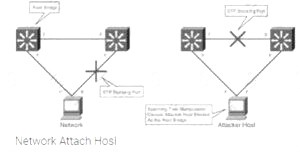
switch
NEW QUESTION 10
While testing a web application in development, you notice that the web server does not properly ignore the “dot dot slash” (../) character string and instead returns the file listing of a folder structure of the server.
What kind of attack is possible in this scenario?
- A. Cross-site scripting
- B. Denial of service
- C. SQL injection
- D. Directory traversal
Answer: D
Explanation:
Appropriately controlling admittance to web content is significant for running a safe web worker. Index crossing or Path Traversal is a HTTP assault which permits aggressors to get to limited catalogs and execute orders outside of the web worker’s root registry.
Web workers give two primary degrees of security instruments Access Control Lists (ACLs) Root index
An Access Control List is utilized in the approval cycle. It is a rundown which the web worker’s manager uses to show which clients or gatherings can get to, change or execute specific records on the worker, just as other access rights.
The root registry is a particular index on the worker record framework in which the clients are kept. Clients can’t get to anything over this root.
For instance: the default root registry of IIS on Windows is C:\Inetpub\wwwroot and with this arrangement, a client doesn’t approach C:\Windows yet approaches C:\Inetpub\wwwroot\news and some other indexes and documents under the root catalog (given that the client is confirmed by means of the ACLs).
The root index keeps clients from getting to any documents on the worker, for example, C:\WINDOWS/system32/win.ini on Windows stages and the/and so on/passwd record on Linux/UNIX stages.
This weakness can exist either in the web worker programming itself or in the web application code.
To play out a registry crossing assault, all an assailant requires is an internet browser and some information on where to aimlessly discover any default documents and registries on the framework.
What an assailant can do if your site is defenselessWith a framework defenseless against index crossing, an aggressor can utilize this weakness to venture out of the root catalog and access different pieces of the record framework. This may enable the assailant to see confined documents, which could give the aggressor more data needed to additional trade off the framework.
Contingent upon how the site access is set up, the aggressor will execute orders by mimicking himself as the client which is related with “the site”. Along these lines everything relies upon what the site client has been offered admittance to in the framework.
Illustration of a Directory Traversal assault by means of web application codeIn web applications with dynamic pages, input is generally gotten from programs through GET or POST solicitation techniques. Here is an illustration of a HTTP GET demand URL
GET
http://test.webarticles.com/show.asp?view=oldarchive.html HTTP/1.1 Host: test.webarticles.com
With this URL, the browser requests the dynamic page show.asp from the server and with it also sends the parameter view with the value of oldarchive.html. When this request is executed on the web
server, show.asp retrieves the file oldarchive.html from the server’s file system, renders it and then sends back to the browser which displays it to the user. The attacker would assume that show.asp can retrieve files from the file system and sends the following custom URL.
GET
http://test.webarticles.com/show.asp?view=../../../../../Windows/system.ini HTTP/1.1 Host: test.webarticles.com
This will cause the dynamic page to retrieve the file system.ini from the file system and display it to the user The expression ../ instructs the system to go one directory up which is commonly used as an operating system directive. The attacker has to guess how many directories he has to go up to find the Windows folder on the system, but this is easily done by trial and error.
Example of a Directory Traversal attack via web serverApart from vulnerabilities in the code, even the web server itself can be open to directory traversal attacks. The problem can either be incorporated into the web server software or inside some sample script files left available on the server.
The vulnerability has been fixed in the latest versions of web server software, but there are web servers online which are still using older versions of IIS and Apache which might be open to directory traversal attacks. Even though you might be using a web server software version that has fixed this vulnerability, you might still have some sensitive default script directories exposed which are well known to hackers.
For example, a URL request which makes use of the scripts directory of IIS to traverse directories and execute a command can be
GET
http://server.com/scripts/..%5c../Windows/System32/cmd.exe?/c+dir+c:\ HTTP/1.1 Host: server.com
The request would return to the user a list of all files in the C:\ directory by executing the cmd.exe comm shell file and run the command dir c:\ in the shell. The %5c expression that is in the URL request is a we server escape code which is used to represent normal characters. In this case %5c represents the character \
Newer versions of modern web server software check for these escape codes and do not let them through. Some older versions however, do not filter out these codes in the root directory enforcer and will let the attackers execute such commands.
NEW QUESTION 11
Why should the security analyst disable/remove unnecessary ISAPI filters?
- A. To defend against social engineering attacks
- B. To defend against webserver attacks
- C. To defend against jailbreaking
- D. To defend against wireless attacks
Answer: B
NEW QUESTION 12
Which iOS jailbreaking technique patches the kernel during the device boot so that it becomes jailbroken after each successive reboot?
- A. Tethered jailbreaking
- B. Semi-tethered jailbreaking
- C. Untethered jailbreaking
- D. Semi-Untethered jailbreaking
Answer: C
Explanation:
An untethered jailbreak is one that allows a telephone to finish a boot cycle when being pwned with none interruption to jailbreak-oriented practicality.
Untethered jailbreaks area unit the foremost sought-after of all, however they’re additionally the foremost difficult to attain due to the powerful exploits and organic process talent they need. associate unbound jailbreak is sent over a physical USB cable association to a laptop or directly on the device itself by approach of associate application-based exploit, like a web site in campaign.
Upon running associate unbound jailbreak, you’ll be able to flip your pwned telephone off and on once more while not running the jailbreak tool once more. all of your jailbreak tweaks and apps would then continue in operation with none user intervention necessary.
It’s been an extended time since IOS has gotten the unbound jailbreak treatment. the foremost recent example was the computer-based Pangu break, that supported most handsets that ran IOS nine.1. We’ve additionally witnessed associate unbound jailbreak within the kind of JailbreakMe, that allowed users to pwn their handsets directly from the mobile campaign applications programme while not a laptop.
NEW QUESTION 13
Harris is attempting to identify the OS running on his target machine. He inspected the initial TTL in the IP header and the related TCP window size and obtained the following results:
TTL: 64 Window Size: 5840
What is the OS running on the target machine?
- A. Solaris OS
- B. Windows OS
- C. Mac OS
- D. Linux OS
Answer: D
NEW QUESTION 14
This TCP flag instructs the sending system to transmit all buffered data immediately.
- A. SYN
- B. RST
- C. PSH
- D. URG
- E. FIN
Answer: C
NEW QUESTION 15
Harry. a professional hacker, targets the IT infrastructure of an organization. After preparing for the attack, he attempts to enter the target network using techniques such as sending spear-phishing emails and exploiting vulnerabilities on publicly available servers. Using these techniques, he successfully deployed malware on the target system to establish an outbound connection. What is the APT lifecycle phase that Harry is currently executing?
- A. Preparation
- B. Cleanup
- C. Persistence
- D. initial intrusion
Answer: D
Explanation:
After the attacker completes preparations, subsequent step is an effort to realize an edge within the target’s environment. a particularly common entry tactic is that the use of spearphishing emails containing an internet link or attachment. Email links usually cause sites where the target’s browser and related software are subjected to varied exploit techniques or where the APT actors plan to social engineer information from the victim which will be used later. If a successful exploit takes place, it installs an initial malware payload on the victim’s computer. Figure 2 illustrates an example of a spearphishing email that contains an attachment. Attachments are usually executable malware, a zipper or other archive containing malware, or a malicious Office or Adobe PDF (Portable Document Format) document that exploits vulnerabilities within the victim’s applications to ultimately execute malware on the victim’s computer. Once the user has opened a malicious file using vulnerable software, malware is executing on the target system. These phishing emails are often very convincing and difficult to differentiate from legitimate email messages. Tactics to extend their believability include modifying legitimate documents from or associated with the organization. Documents are sometimes stolen from the organization or their collaborators during previous exploitation operations. Actors modify the documents by adding exploits and malicious code then send them to the victims. Phishing emails are commonly sent through previously compromised email servers, email accounts at organizations associated with the target or public email services. Emails also can be sent through mail relays with modified email headers to form the messages appear to possess originated from legitimate sources. Exploitation of vulnerabilities on public-facing servers is another favorite technique of some APT groups. Though this will be accomplished using exploits for known vulnerabilities, 0-days are often developed or purchased to be used in intrusions as required .
Gaining an edge within the target environment is that the primary goal of the initial intrusion. Once a system is exploited, the attacker usually places malware on the compromised system and uses it as a jump point or proxy for further actions. Malware placed during the initial intrusion phase is usually an easy downloader, basic
Remote Access Trojan or an easy shell. Figure 3 illustrates a newly infected system initiating an outbound connection to notify the APT actor that the initial intrusion attempt was successful which it’s able to accept commands.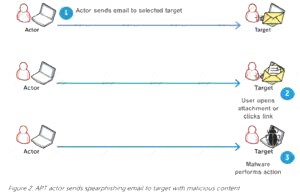
NEW QUESTION 16
Which of the following allows attackers to draw a map or outline the target organization's network infrastructure to know about the actual environment that they are going to hack.
- A. Enumeration
- B. Vulnerability analysis
- C. Malware analysis
- D. Scanning networks
Answer: D
NEW QUESTION 17
An Intrusion Detection System (IDS) has alerted the network administrator to a possibly malicious sequence of packets sent to a Web server in the network’s external DMZ. The packet traffic was captured by the IDS and saved to a PCAP file. What type of network tool can be used to determine if these packets are genuinely malicious or simply a false positive?
- A. Protocol analyzer
- B. Network sniffer
- C. Intrusion Prevention System (IPS)
- D. Vulnerability scanner
Answer: A
NEW QUESTION 18
Attempting an injection attack on a web server based on responses to True/False QUESTION NO:s is called which of the following?
- A. Compound SQLi
- B. Blind SQLi
- C. Classic SQLi
- D. DMS-specific SQLi
Answer: B
Explanation:
https://en.wikipedia.org/wiki/SQL_injection#Blind_SQL_injection
Blind SQL injection is used when a web application is vulnerable to an SQL injection but the results of the injection are not visible to the attacker. The page with the vulnerability may not be one that displays data but will display differently depending on the results of a logical statement injected into the legitimate SQL statement called for that page. This type of attack has traditionally been considered time-intensive because a new statement needed to be crafted for each bit recovered, and depending on its structure, the attack may consist of many unsuccessful requests. Recent advancements have allowed each request to recover multiple bits, with no unsuccessful requests, allowing for more consistent and efficient extraction.
NEW QUESTION 19
Leverox Solutions hired Arnold, a security professional, for the threat intelligence process. Arnold collected information about specific threats against the organization. From this information, he retrieved contextual information about security events and incidents that helped him disclose potential risks and gain insight into attacker methodologies. He collected the information from sources such as humans, social media, and chat
rooms as well as from events that resulted in cyberattacks. In this process, he also prepared a report that includes identified malicious activities, recommended courses of action, and warnings for emerging attacks. What is the type of threat intelligence collected by Arnold in the above scenario?
- A. Strategic threat intelligence
- B. Tactical threat intelligence
- C. Operational threat intelligence
- D. Technical threat intelligence
Answer: C
NEW QUESTION 20
Thomas, a cloud security professional, is performing security assessment on cloud services to identify any loopholes. He detects a vulnerability in a bare-metal cloud server that can enable hackers to implant malicious backdoors in its firmware. He also identified that an installed backdoor can persist even if the server is reallocated to new clients or businesses that use it as an laaS.
What is the type of cloud attack that can be performed by exploiting the vulnerability discussed in the above scenario?
- A. Man-in-the-cloud (MITC) attack
- B. Cloud cryptojacking
- C. Cloudborne attack
- D. Metadata spoofing attack
Answer: C
NEW QUESTION 21
......
P.S. Dumps-hub.com now are offering 100% pass ensure 312-50v12 dumps! All 312-50v12 exam questions have been updated with correct answers: https://www.dumps-hub.com/312-50v12-dumps.html (503 New Questions)
